
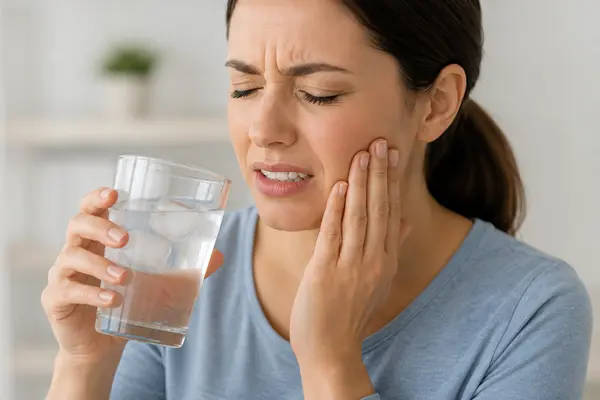
Have you ever taken a sip of ice-cold water and suddenly felt a sharp pain in one or more teeth?
You may notice it with cold water, ice cream, chilled drinks, or even when breathing in cold air. The discomfort can be surprising, especially if your teeth otherwise feel completely normal.
Occasional sensitivity does not necessarily mean you have a serious dental problem. However, recurring or intense sensitivity should not simply be ignored. Tooth sensitivity can have several causes, ranging from enamel wear and exposed tooth roots to cavities and other dental concerns.
If you are experiencing tooth sensitivity in Silver Spring, MD, understanding what may be behind it can help you decide when it is time to schedule a dental examination.
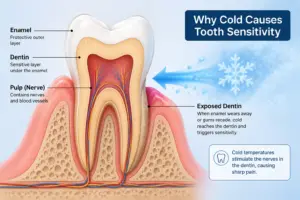
When protective enamel or gum tissue is reduced, cold temperatures can affect sensitive areas of the tooth.
What Causes Tooth Sensitivity to Cold?
Your teeth are protected by enamel, the hard outer layer that shields the more sensitive structures underneath. Beneath the enamel is dentin, which contains microscopic pathways that can transmit sensations toward the nerve inside the tooth.
When enamel becomes thinner or the roots of your teeth become exposed, cold temperatures can reach these sensitive areas more easily. This can create the quick, sharp sensation commonly associated with sensitive teeth.
Several things can contribute to this problem.
Enamel Wear
Enamel does not grow back once it has been permanently lost. Aggressive brushing, acidic foods and drinks, or other forms of enamel erosion can gradually make the protective layer thinner.
When the underlying dentin becomes more exposed, cold foods and drinks may trigger sensitivity.
This is one reason brushing harder is not necessarily better. A consistent, gentle brushing technique with fluoride toothpaste is generally preferable to using excessive pressure.
Gum Recession
Your gums help protect the roots of your teeth. Unlike the crown of a tooth, the root does not have the same thick enamel covering.
If your gums recede, portions of the tooth root can become exposed. You may then notice sensitivity when drinking something cold, eating something sweet, or brushing in that area.
Gum recession can have different causes, so a dental examination can help determine why it is happening.
Tooth Decay
A cavity may also cause sensitivity.
Early tooth decay does not always cause noticeable symptoms, which means you should not assume that a tooth is healthy simply because it does not hurt. As decay progresses, sensitivity or pain may develop.
A formed cavity cannot heal itself once the tooth structure has broken down. Early professional attention can help determine whether the area can be managed conservatively or requires restorative treatment. citeturn1search0turn1search2
Cracked or Damaged Teeth
A small crack in a tooth can sometimes cause sensitivity, particularly when eating or drinking something cold.
You may also notice discomfort when biting down or releasing your bite. Cracks can be difficult to identify by looking in the mirror, so persistent symptoms deserve professional attention.
Recent Dental Treatment
Some people experience temporary sensitivity after certain dental procedures.
For example, teeth may feel more sensitive after whitening or other dental treatment. The duration and severity can vary depending on the procedure and the individual.
If sensitivity is persistent, worsening, or significantly affecting your daily activities, contact your dental office rather than assuming it will eventually disappear.
Why Does Cold Cause Such a Sharp Pain?
Cold temperatures can stimulate the nerves inside a sensitive tooth.
When the protective enamel or gum tissue is no longer providing as much coverage, temperature changes can affect the dentin underneath. The result may be a sudden sensation that feels sharp or electric.
The good news is that sensitivity that lasts only briefly after exposure to cold is different from pain that continues long after the cold food or drink is gone.
That difference is worth paying attention to.
When Is Tooth Sensitivity a Reason to See a Dentist?
You do not necessarily need to panic over one brief episode of sensitivity.
However, consider scheduling an examination if:
- The same tooth repeatedly hurts when exposed to cold.
- Sensitivity is becoming more frequent or intense.
- Pain continues after the cold stimulus is gone.
- You experience pain when biting or chewing.
- You notice a visible crack, dark area, or hole in a tooth.
- Your gums appear to be receding.
- You have recently experienced dental trauma.
- Tooth sensitivity is interfering with eating or drinking.
A dentist can examine the tooth and determine whether the sensitivity is related to enamel wear, gum recession, decay, a crack, or another issue.
Can Sensitive Teeth Be Prevented?
You cannot prevent every possible cause of tooth sensitivity, but everyday habits can help protect your teeth.
Use a Gentle Brushing Technique
Brushing aggressively can contribute to enamel wear and gum irritation. Use a soft-bristled toothbrush and gentle movements rather than pressing hard against your teeth.
Use Fluoride Toothpaste
Fluoride helps strengthen enamel and plays an important role in preventing tooth decay. Brush regularly with fluoride toothpaste as part of your daily oral hygiene routine.
Pay Attention to Acidic Foods and Drinks
Frequent exposure to acidic foods and beverages can contribute to enamel erosion.
This does not mean you have to eliminate every acidic food from your diet. Instead, consider how frequently your teeth are exposed and maintain good oral hygiene habits.
Clean Between Your Teeth
Brushing alone cannot effectively clean every surface between your teeth. Daily cleaning between the teeth helps remove plaque and food debris from areas a toothbrush may miss.
Keep Regular Dental Visits
One of the easiest problems to manage is one that is identified early.
Routine dental examinations allow your dentist to look for problems that may not yet be causing symptoms, including areas of tooth decay or changes affecting your gums.
Does Tooth Sensitivity Always Mean You Have a Cavity?
No.
Tooth sensitivity can occur for several reasons, and a cavity is only one possibility.
For example, someone with enamel erosion or gum recession may experience sensitivity without having a cavity. On the other hand, decay can also develop without obvious pain in its early stages.
That is why trying to diagnose the cause based only on how the tooth feels can be misleading.
If sensitivity keeps returning, a dental examination is a better way to determine what is actually happening.
What Can You Do Until Your Dental Appointment?
If cold foods and drinks are triggering discomfort, you can temporarily reduce exposure to very cold temperatures.
You can also continue brushing and cleaning between your teeth rather than avoiding the affected area. Avoiding oral hygiene because a tooth feels sensitive can allow plaque to build up and potentially make the underlying problem worse.
Most importantly, do not use home remedies as a substitute for a dental examination when symptoms persist.
The appropriate treatment depends on the reason for the sensitivity.
Tooth Sensitivity in Silver Spring, MD: When to Get It Checked
If drinking cold water regularly causes a sharp sensation in your teeth, your body may be telling you that something deserves attention.
Sometimes the explanation is relatively straightforward, such as exposed dentin or gum recession. In other cases, sensitivity can be associated with decay, a damaged tooth, or another dental concern.
The important thing is not to wait for severe pain before paying attention.
At Colesville Dental Center, patients in Silver Spring can receive an evaluation to help identify the cause of tooth sensitivity and determine the appropriate next step. The practice is located at 8737 Colesville Road #301 in Silver Spring, MD, and provides general and restorative dental services.
A dental examination can help identify the cause of recurring tooth sensitivity.
If cold drinks consistently make your teeth hurt, schedule an appointment rather than guessing at the cause.
Frequently Asked Questions About Sensitive Teeth
Why do my teeth hurt when I drink cold water?
Cold water can trigger pain when enamel is worn, dentin or tooth roots are exposed, gums have receded, or a tooth has another problem such as decay or damage. A dental examination can help identify the specific cause.
Can sensitive teeth go back to normal?
Sometimes sensitivity improves when the underlying cause is addressed. However, the appropriate treatment depends on why the tooth is sensitive. Persistent symptoms should be evaluated by a dentist.
Is tooth sensitivity a sign of a cavity?
It can be, but sensitivity does not automatically mean you have a cavity. Enamel wear, gum recession, exposed roots, cracks, and other conditions can also cause sensitivity.
Why does only one tooth hurt when I drink something cold?
Sensitivity limited to one tooth can sometimes point to a localized issue, such as decay, a crack, exposed dentin, or another dental problem. If the same tooth repeatedly reacts to cold, it is worth having it examined.
Should I stop drinking cold drinks if my teeth are sensitive?
Reducing very cold foods and drinks may help avoid triggering discomfort temporarily, but it does not address the underlying cause. If sensitivity is recurring, professional evaluation is more useful than simply avoiding cold foods.
When should I worry about tooth sensitivity?
Make a dental appointment if sensitivity is persistent, worsening, occurs in one particular tooth repeatedly, lasts after the cold stimulus is gone, or is accompanied by pain when biting, swelling, visible damage, or other changes.
Protect Your Smile Before a Small Problem Becomes a Bigger One
Tooth sensitivity is easy to dismiss when the pain disappears within a few seconds. But recurring sensitivity can be a useful reason to pay closer attention to your oral health.
Rather than waiting until cold drinks become impossible to enjoy—or until a small dental problem becomes painful—consider having the cause checked.
Book an appointment with Colesville Dental Center in Silver Spring, MD to discuss persistent tooth sensitivity and protect your natural smile.